Hip Hop Hoodie Real God Speed Shorts
Article By
Godspeed Sizing and Fit: A Practical Guide
The most expensive mistake with this label is sizing, and it is a structural problem rather than a careless one. Since the house cut is boxy and oversized-relaxed, the garment already carries volume you did not ask for, and the instincts you normally trust stop applying. Runs are small, which means by the time you spot the error, the size you needed may no longer exist. Getting it wrong is not a small loss when 2026 market estimates put hoodies between $200 and $270, sets from $155 to $360, denim around $250 and cargo pants near $350. Starting from body measurements in inches and centimetres, the guide then covers each category. Keep a tape measure to hand while you read.
Measure Yourself First
Numbers taken from your own body, not from a garment you already own, are where every useful sizing decision starts. Chest and natural waist do most of the work, leaving sleeve and inseam for the rest. Around the fullest part of the chest, tape level under the arms and one finger of slack so nothing compresses. Find the waist above the hip bone and below the ribs, not at the line your jeans normally sit on. Heavyweight fleece can add two inches, or five centimetres, of false reading, so measure over a thin shirt or bare skin. Record both units, since product information circulates in both and converting on the spot is where mistakes appear.
- Chest: at the fullest point, with the tape level and one finger of slack.
- Natural waist: above the hip god-speed-clothing.com bone and below the ribs, stomach relaxed.
- Sleeve: measure from the centre back of the neck across the shoulder to the wrist bone.
- Body length: start at the highest shoulder point and finish where the hem should land.
- The inseam: take it barefoot, crotch seam to floor, for a stacked leg.
The Reference Chart
With one caveat attached: the table below translates body measurements into a starting letter size. Treat them as general body-measurement bands, never an official chart from the label, and as a defensible starting point rather than a guarantee. A product page listing its own garment measurements always beats a general table like this. Body numbers describe you and garment numbers describe the piece laid flat, so keep the two apart. The final column covers how each band reads once the boxy house cut is applied, a detail no standard chart gives you. Read across rather than down, starting with chest for tops and waist for bottoms.
| Size label | Chest (in) | Chest (cm) | Waist (in) | Waist (cm) | What the boxy cut does with it |
|---|---|---|---|---|---|
| S | 35 to 37 | 89 to 94 | 28 to 30 | 71 to 76 | Easy on a slim frame; short in the body |
| M | 38 to 40 | 97 to 102 | 31 to 33 | 79 to 84 | Broad across the chest, nearly true oversized |
| L | 41 to 43 | 104 to 109 | 34 to 36 | 86 to 91 | A full oversized shape; the sleeves sit long |
| XL | 44 to 46 | 112 to 117 | 37 to 39 | 94 to 99 | Width dominates while length barely moves |
| 2XL | 47 to 49 | 119 to 124 | 40 to 42 | 102 to 107 | Volume takes over; only size up if you need length |
| 3XL | 50 to 52 | 127 to 132 | 43 to 45 | 109 to 114 | Width at its maximum; look closely at the shoulder drop |
What A Boxy Cut Actually Changes
A boxy garment is cut wide in relation to its length, which is different from simply being large. Chest and body length grow together on a conventional tee, keeping the proportions roughly constant. On a boxy cut, width increases faster than length, so each size up adds squareness, not length. Go up a size chasing length on a boxy godspeed shirt and you get a much wider garment and barely any more length. For taller wearers, the limiting measurement is body length rather than chest. If you are over about six foot two, or 188 centimetres, should look at body length first and take the width that comes with it.
The Size-Down Debate
The question asked most often about god speed clothing is whether to size down, and the answer depends on what you want the piece to look like. Take your true size from the table and leave it there if you want the silhouette the brand designed. One size down usually achieves a normal relaxed fit on tops, when that is what you are after. The cost is length in the body and the sleeve, fine on a tee, noticeable on a hoodie. Sizing down fails on outerwear, because a layering jacket stops working over fleece as soon as a size comes off. Only size down on tops, only by a single size, and only as a decision.
Hoodies and Heavyweight Fleece
Fabric weight shifts sizing in ways thin material never does, and a godspeed hoodie is the clearest example. Because heavy fleece stands away from the body rather than draping, it keeps a shape of its own and reads bulkier than its measurements. Two garments with identical flat measurements and the heavy hoodie still reads larger than the light sweatshirt. Pullover and zip-through versions do not behave the same either, since a zip adds structure through the front and limits how much the body billows. Fleece tightens a little if washed hot, so buy the fit you want and wash cold to hold it. Where the hoodie will live under a jacket, size it to your body, because the outerwear is already generous.
T-Shirts and Layering Pieces
Being the most forgiving category, tees are also the cheapest place to learn how the sizing runs. Observed 2026 market estimates place them between $128 and $200, the bulk around $150 to $170, sleeveless near $170 and long sleeve near $200. Since no weight of cloth disguises it, the boxy cut is at its most obvious here, and the shoulder seam sits past the shoulder point deliberately. Next to the standard short sleeve, layered and long sleeve styles run slightly closer through the body. Sleeveless pieces run wider at the armhole than most people expect, so sizing down is worth considering there. Getting two sizes of godspeed shirts side by side costs less than guessing wrong on a $350 cargo pant.
Bottoms: Sweats, Cargo Pants and Jeans
Read bottoms from the waist column, not the chest, and treat leg length as the second variable. Cut relaxed, matching-set sweatpants normally sit at true waist size with no adjustment. Wider through the thigh and finishing in a flared or stacked hem, cargo pants and premium denim are designed to pool over the shoe rather than break cleanly. If a pair looks too long out of the bag, it is usually correct, and hemming strips out the shape the pattern was built around. Denim seen around $250 comes garment washed, and washed cotton relaxes at the waist with wear, so choosing the tighter of two options often pays off. Treat the top and bottom of a set as separate sizing decisions.
Outerwear: Varsity, Moto and Puffer
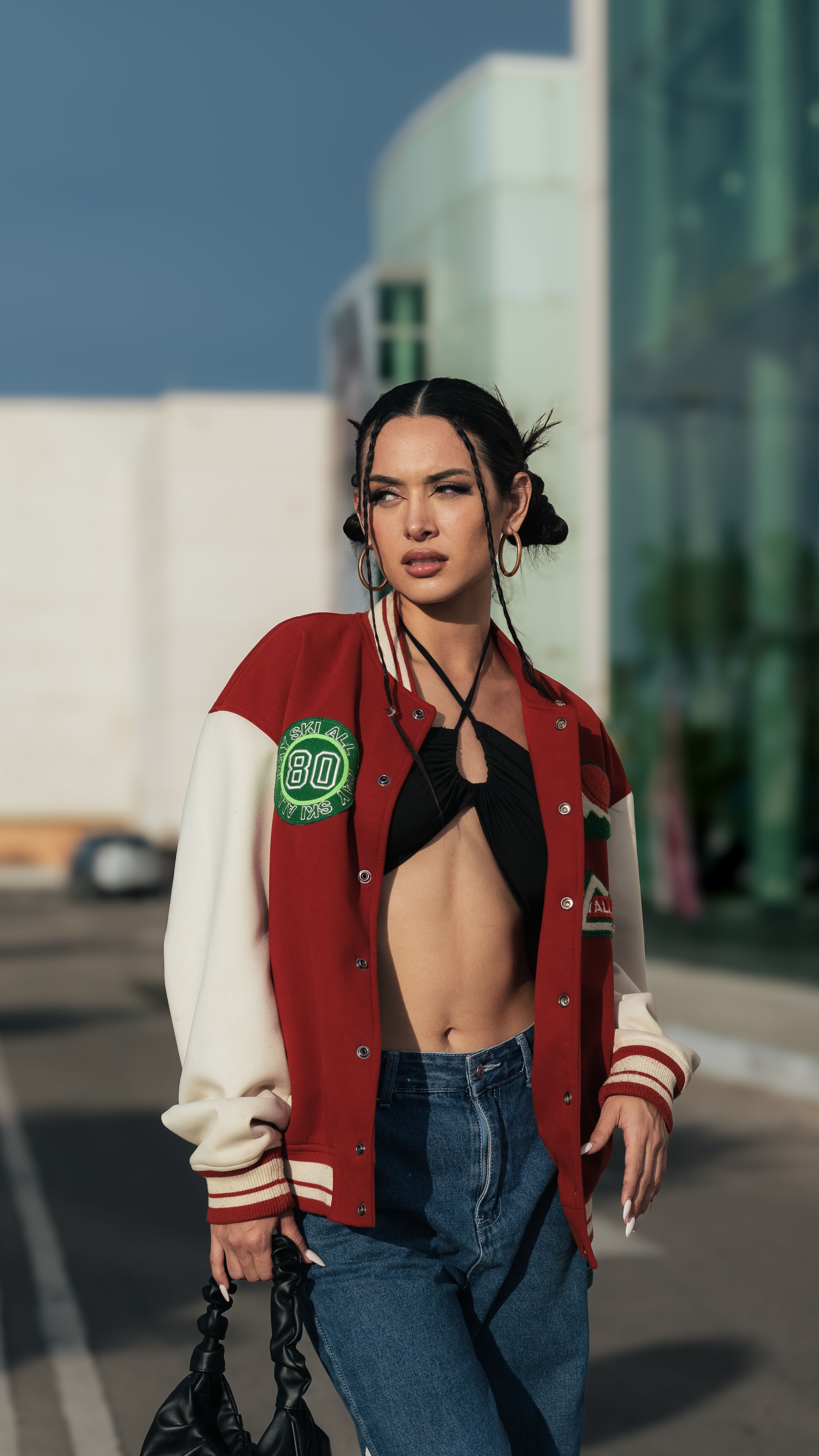
Scarcity rather than construction makes outerwear the least forgiving category. Given stated runs of 200 units with numbered authenticity tags on the F.T.D and Chrome Seduction varsity jackets, an exchange is not a realistic fallback. Varsity construction sets a wool body against vegan-leather or vegan-suede sleeves, and neither of those sleeve materials stretches, so an arm that is tight from the start remains tight. Take your true size rather than adding one for fleece, because wool bodies are already cut for a layer beneath. The leather moto gives even less, and whether it works at all comes down to the shoulders. Since the insulation compresses, a puffer is the one place a slightly larger size can be justified.
The Mistakes Worth Avoiding
Most sizing failures come from a few repeated assumptions rather than bad luck. People use a garment they already own as the benchmark without asking whether it was cut boxy or conventional. Sizing up for length on a cut where length barely moves, or sizing down for a cleaner line on a jacket that needs the room, are both common. Measuring over a thick layer or taking the waist at the trouser line lands people a full size out. A last group orders a matching set in one size from habit, then ends up with a good top and bad bottoms. Running the checks below avoids almost all of it.
- Measure your body, not a favourite hoodie, and record both inches and centimetres.
- Look up the product page’s own flat measurements before trusting any general table.
- Before choosing a size, decide between intended oversized and relaxed.
- Treat body length as the limiting number if you are tall, not chest width.
- Never size down on wool or vegan-leather outerwear; nothing there stretches back.
- Treat the two halves of a set as separate sizes and check both are in stock.

